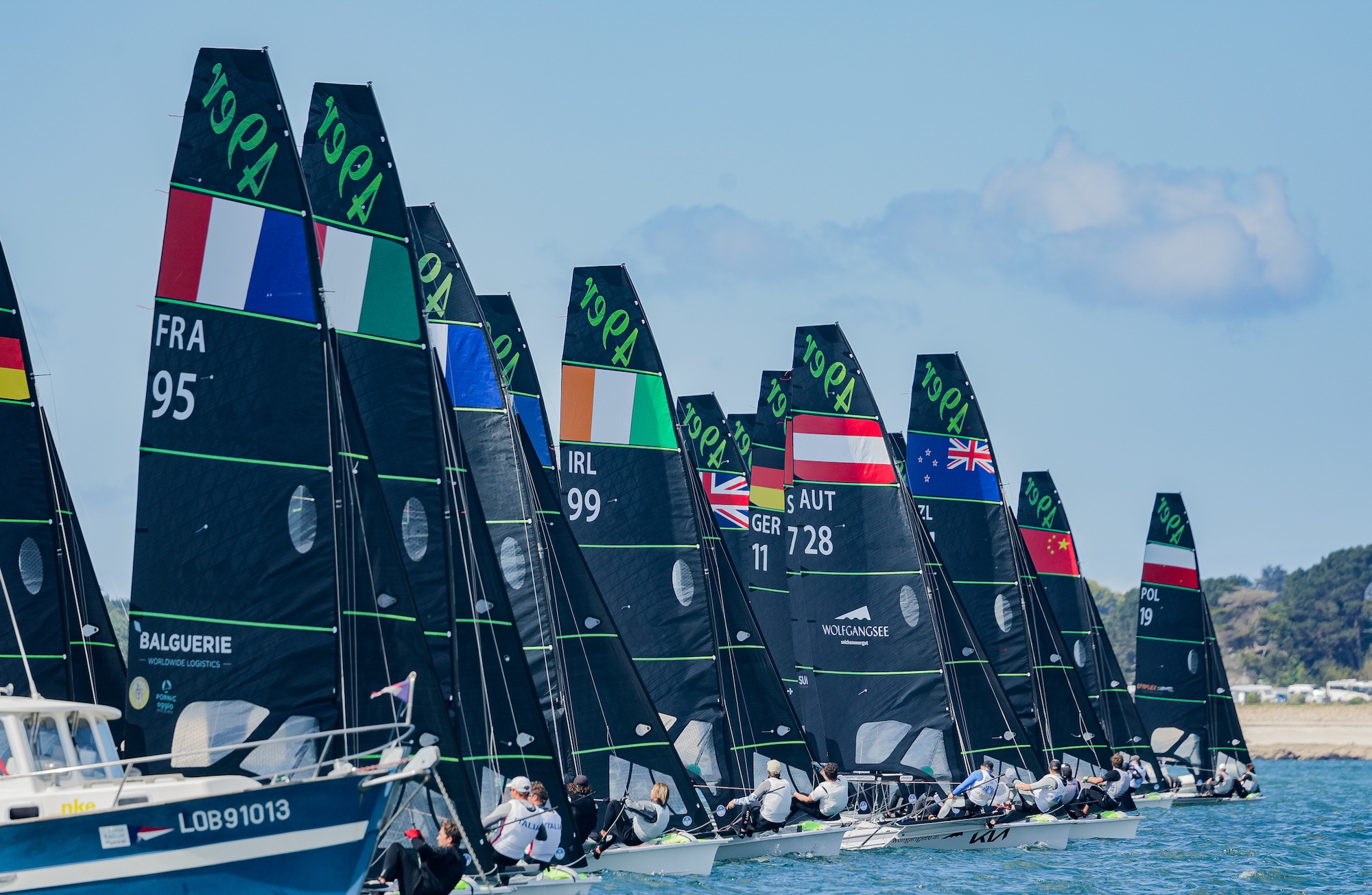
If yesterday’s action in the Bay of Quiberon was a brutal test of survival—a day of capsizes, crashes, pitch-poles, and sailors literally reversing across the finish line to stay upright—today was a sophisticated game of high-speed chess. The “nastiness” of the Bay was replaced by a shifty, tactical northwest breeze ranging from 8 to 18 knots. It was a day where the marginal gains of boat handling and the high-stakes investment in foiling modes dictated the leaderboard, and where the new guard of Olympic sailing began to exert its dominance.
The 49er Fleet: A Southern Hemisphere Takeover
View this post on Instagram
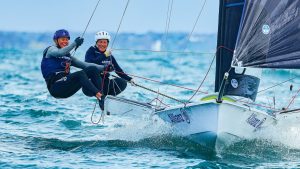
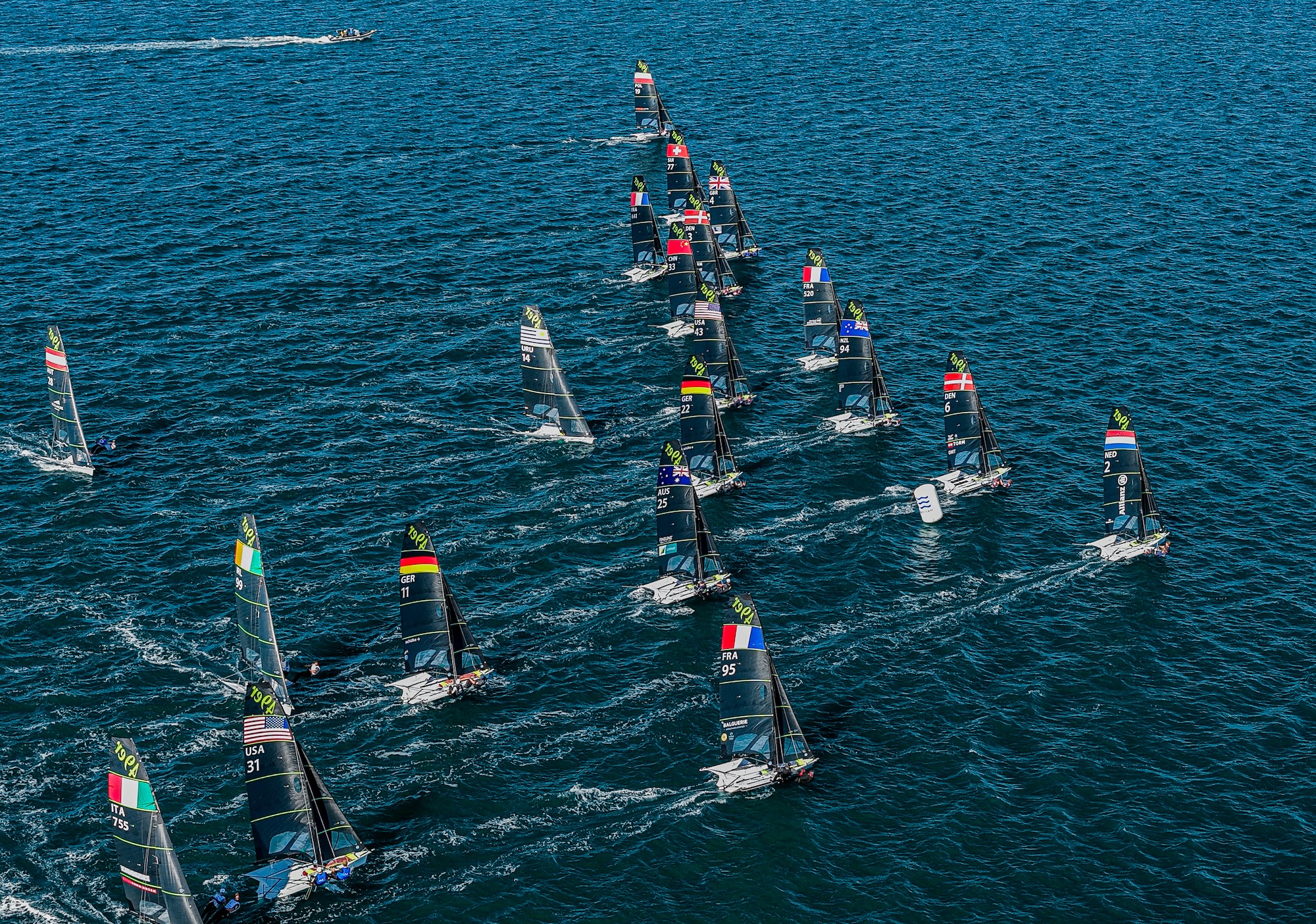
The 49er gold fleet racing was characterized by dramatic swings in fortune, dictated largely by a racecourse that favored those brave enough to hunt for pressure on the right-hand side. The day belonged to the Southern Hemisphere, as Australian and New Zealander teams showcased a superior ability to read the oscillating Quiberon breeze.
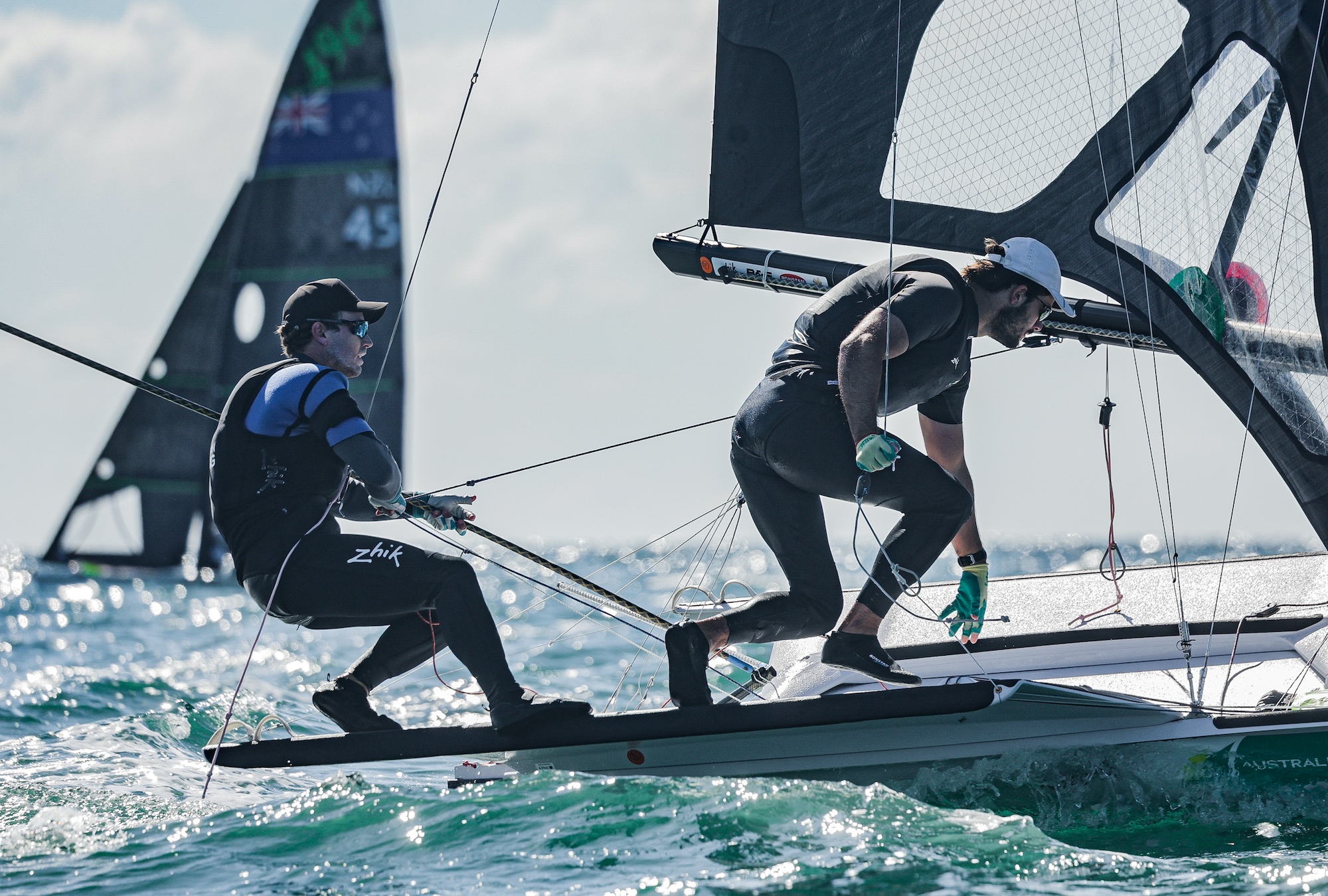
The opening race of the afternoon saw Harry Price and Max Paul (AUS) deliver a tactical masterclass. Despite a “second row” start that initially left them buried in the disturbed air of the Dutch, the Australians didn’t panic. They realized early that the right side of the course was paying a massive dividend. By the first windward mark, they had leapfrogged the field, holding off a fierce challenge from the 2024 World Champions, Erwan Fischer and Clément Péquin (FRA), to claim the first bullet.
View this post on Instagram
© Sailing Energy / 49er and Nacra Class
© Sailing Energy / 49er and Nacra Class
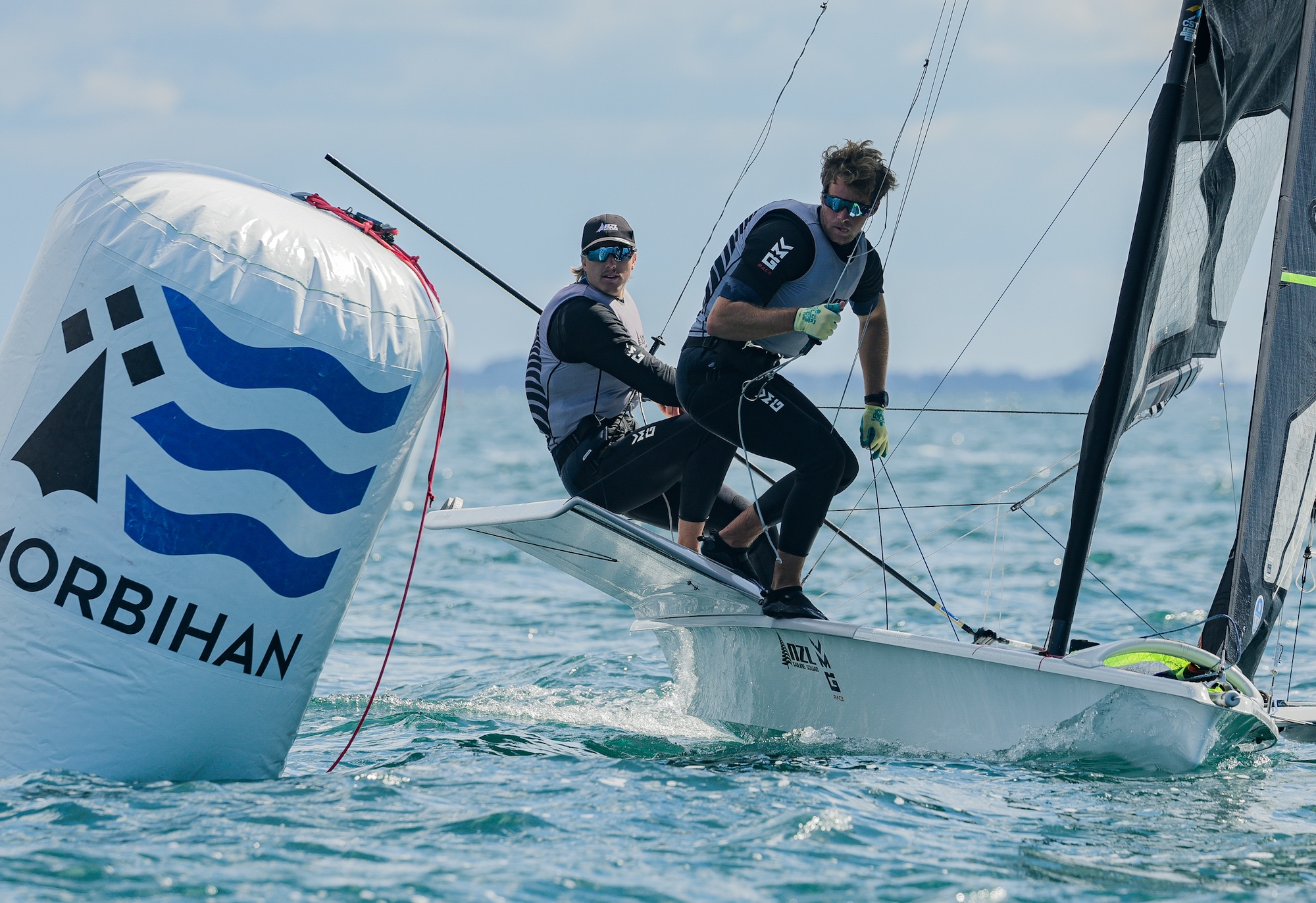
However, the headline story of the day was the rise of the young Kiwis, Seb Menzies and George Lee Rush. Sailing with a level of maturity that belies their age, the New Zealanders produced a remarkably consistent 5-8-2 scoreline. Their final race was a heart-stopper; while duking it out for the win with the Germans, they were forced into a 360-degree penalty turn just meters from the finish line. Even with the time lost to the penalty, their raw pace was enough to secure second in that race and propel them into the overall lead of the World Championship.
View this post on Instagram
© Sailing Energy / 49er and Nacra Class
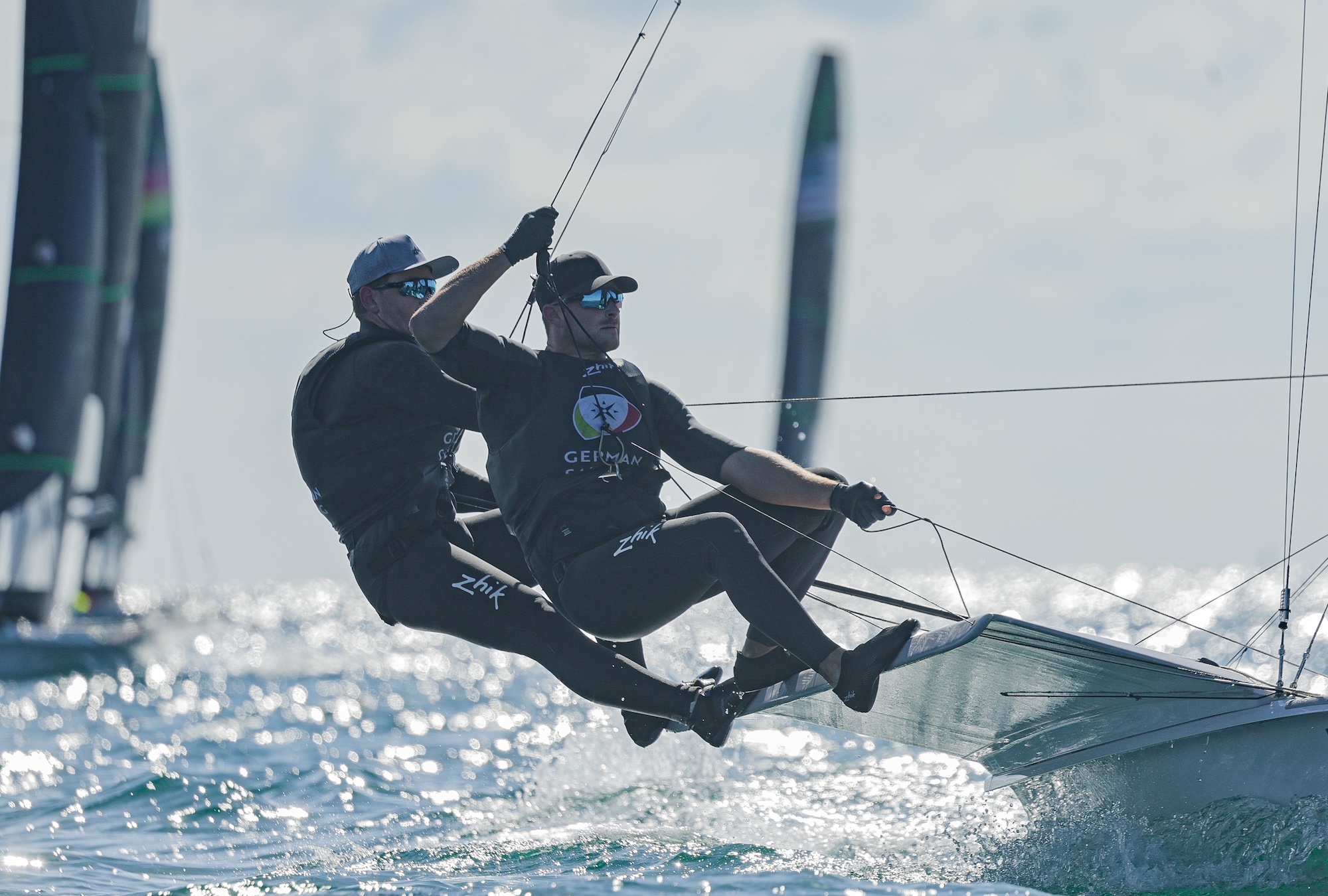
Team Germany also enjoyed a standout day, proving the incredible depth of their national squad. Jakob Meggendorfer and Andreas Spranger dominated the middle race of the day, winning comfortably to signal their return to top form following a string of injuries. The final 49er race was claimed by another German pair, Richard Schultheis and Fabian Rieger, who defended their lead against the Kiwis in the tightest finish of the afternoon.
© Sailing Energy / 49er and Nacra Class
Nacra 17: The High-Stakes Foiling Precision
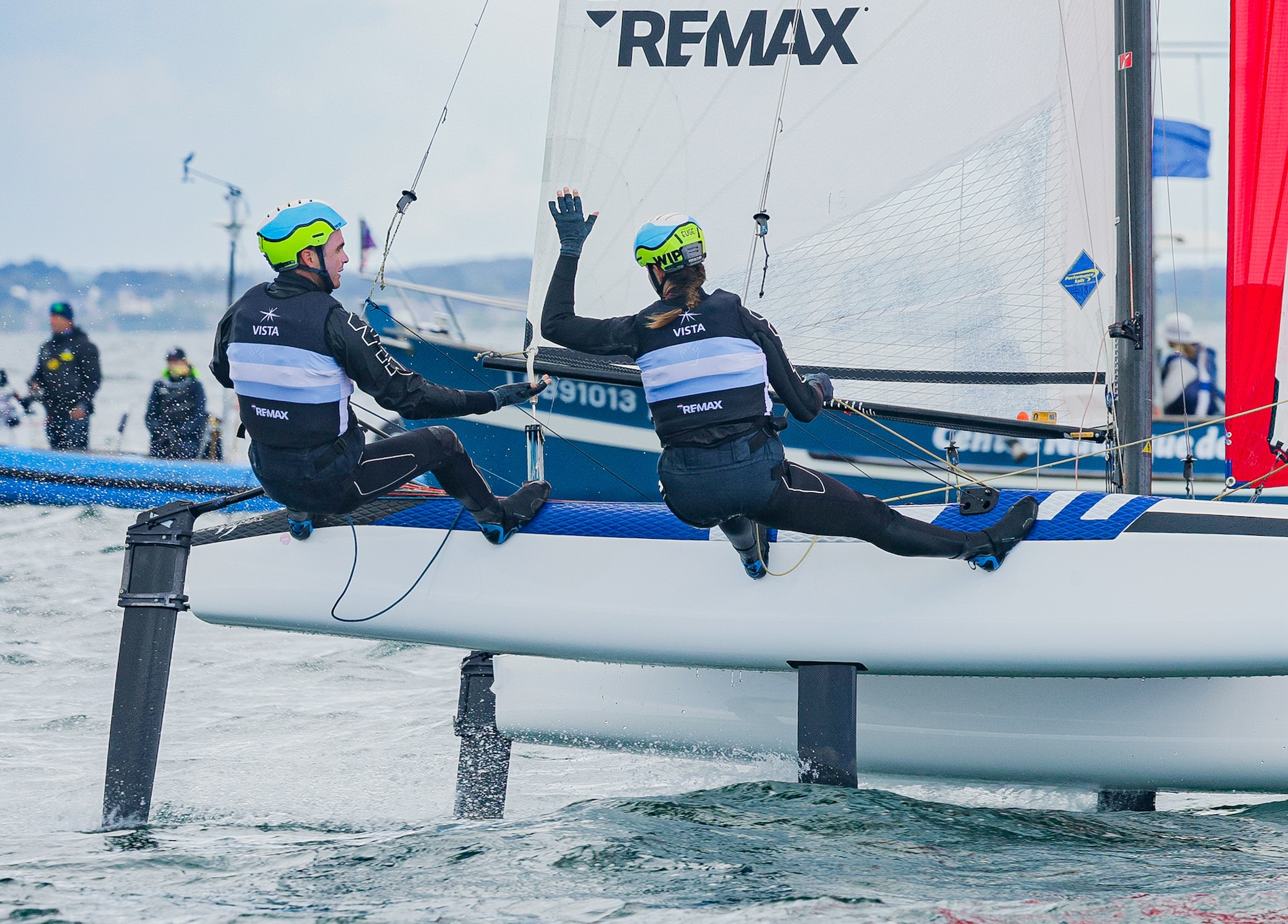
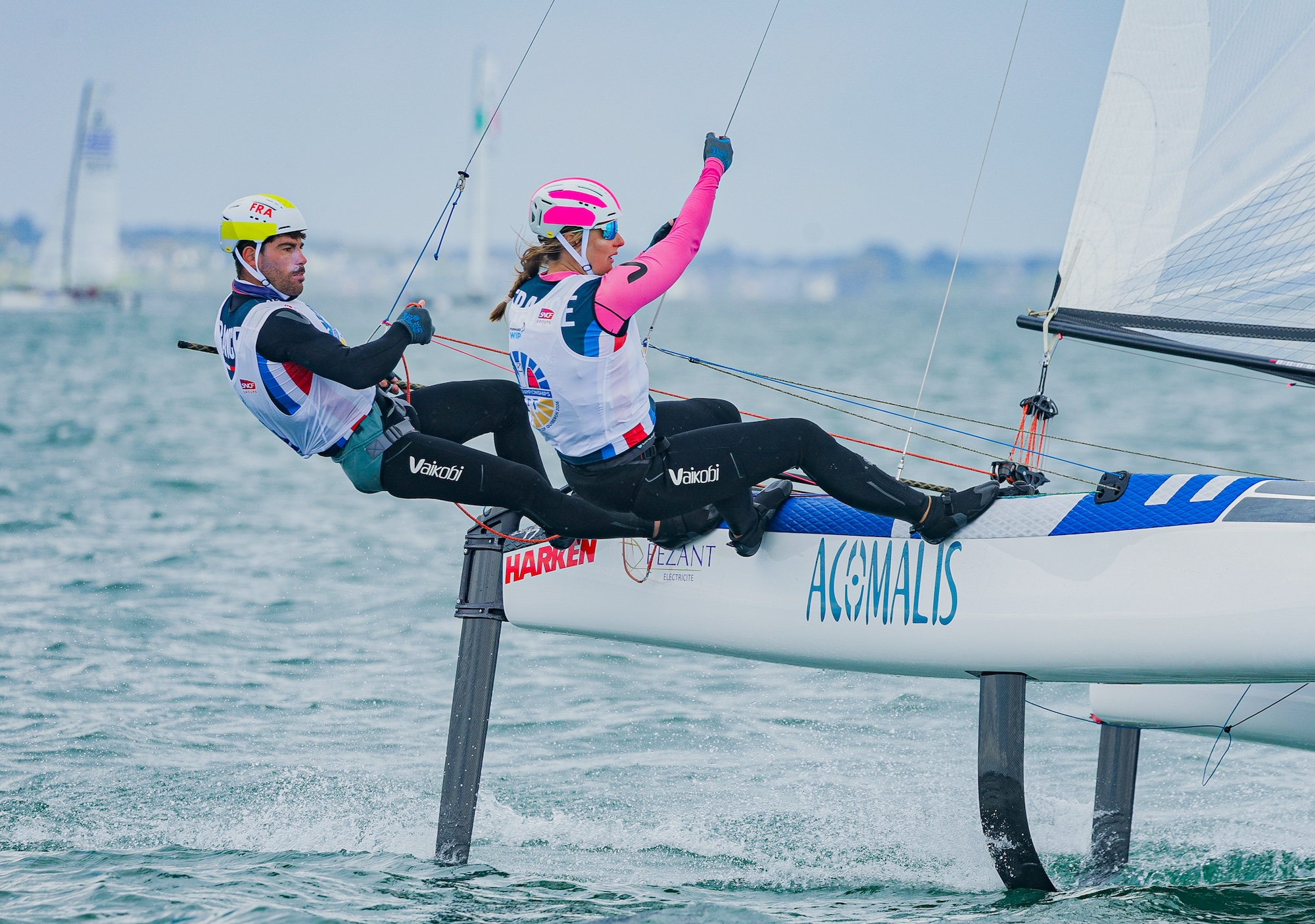
The Nacra 17 fleet provided a stark visual representation of preparation meeting opportunity in sailing. In the marginal foiling conditions of the afternoon, the speed differential between a boat “low-riding” with one hull in the water (H1 mode) and a boat fully foiling on all fours was staggering—often exceeding 10 knots of boat speed.
Mateo Majdalani and Eugenia Bosco (ARG) delivered the performance of the regatta in Race 8. While the rest of the fleet hesitated, the Argentinian silver medallists found a personal gear, popping onto the foils and extending a lead that grew to over 500 metres by the finish. It was a haunting display of straight-line efficiency that left even the reigning world champions, John Gimson and Anna Burnett (GBR), fighting for scraps in the pack.
© Sailing Energy / 49er and Nacra Class
View this post on Instagram
View this post on Instagram
© Sailing Energy / 49er and Nacra Class
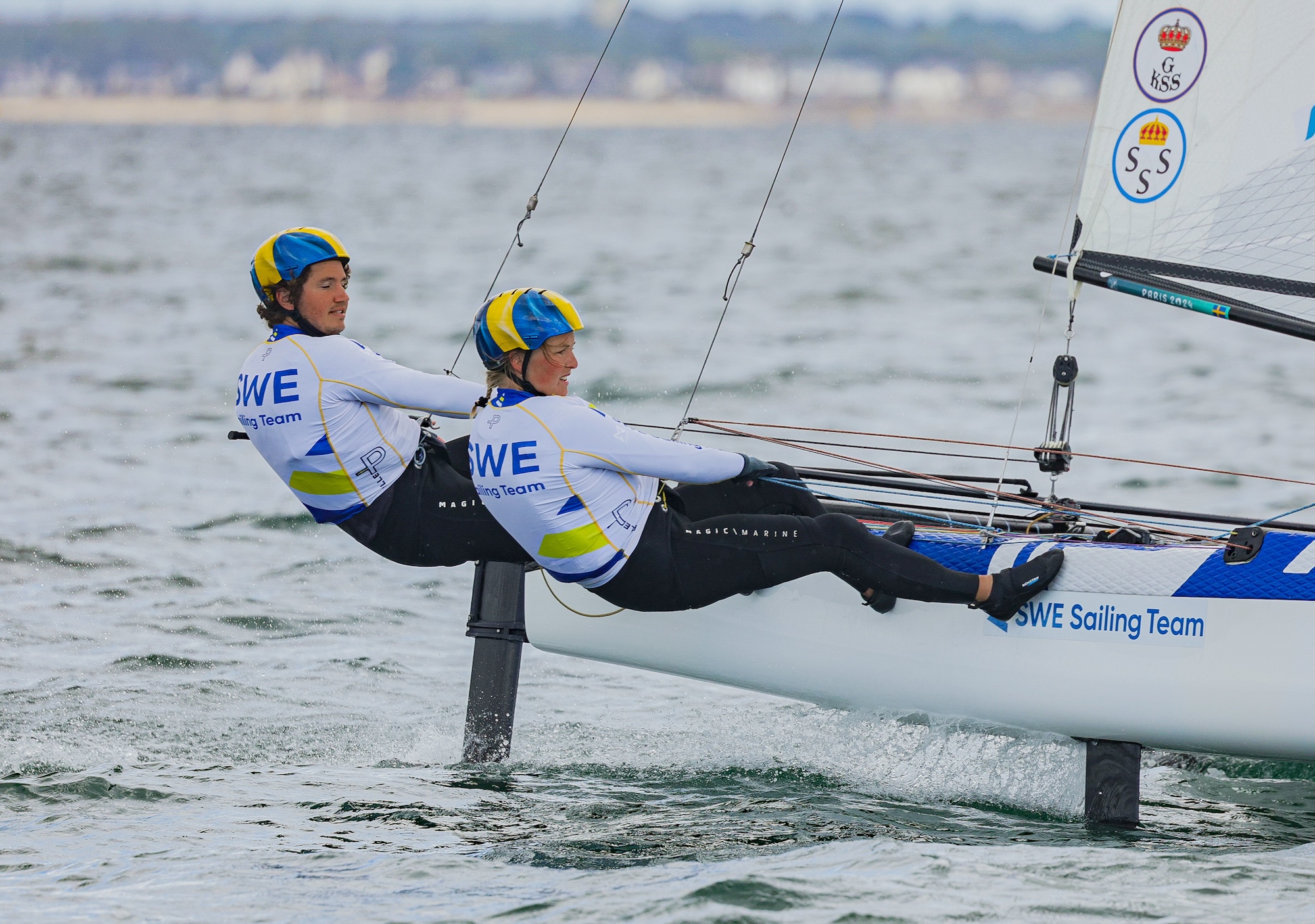
The Swedes, however, proved that tactical patience can be just as valuable as raw power. Emil Järudd and Hannah Jonsson (SWE) showcased their skill at keeping on the foils. After a difficult start to the week, they invested heavily in the foiling mode on the second upwind leg, literally sailing in between the Italians and the Dutch, but staying foiling while the others could not. Their 350-metre victory was a morale-boosting reminder of why they remain one of the most dangerous teams in the fleet when the conditions are marginal foiling.
© Sailing Energy / 49er and Nacra Class
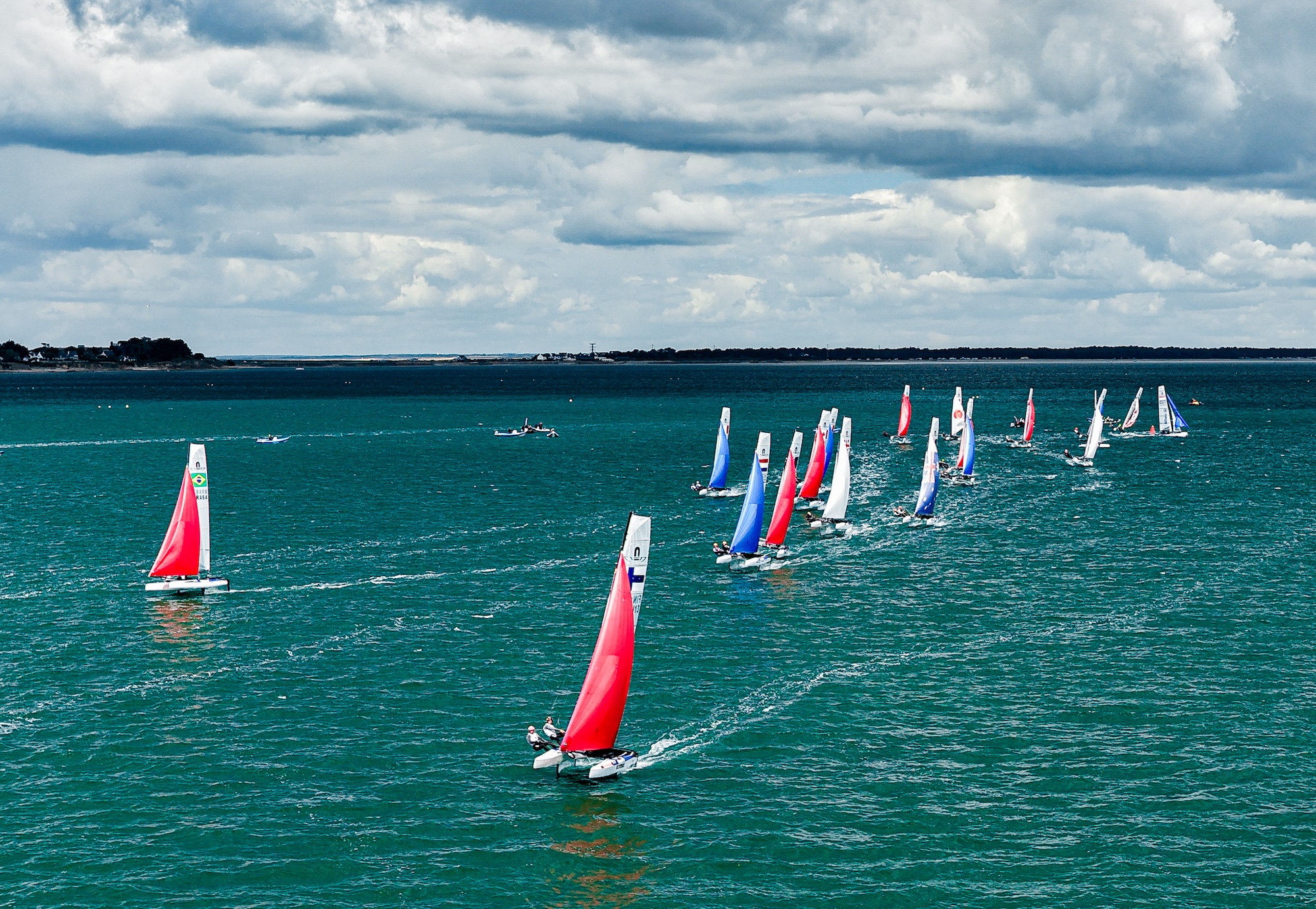
The final race of the day saw a breakthrough for Finland’s Akseli Keskinen and Katariina Roihu. In the tightest Nacra finish of the day, the Finnish team held their nerve under immense pressure from a fast-closing Italian squad to take their first win of the championship. The final race was the closest of the three, as the wind had picked up so all teams could foil all the time, making for a closer matched race.
Sailing solidly throughout the afternoon were the Italian team, Gianluigi Ugolini and Maria Giubilei whose scores of 6,2,2 have moved them to just two points off the French overall lead held by Tim Mourniac and Aloise Retornaz. These front two have a huge points gap on the pack, the next best team being the reigning World Champions from Great Britain in third. John Gimson and Anna Burnet are 15 points behind the second-placed Italians, so need a good day on Saturday to gain some momentum before the medal-deciding races on Sunday.
© Sailing Energy / 49er and Nacra Class
View this post on Instagram
View this post on Instagram
49erFX: Peyre and Riou Seize Gold Fleet Lead as French Crowd Finds Its Voice
© Sailing Energy / 49er and Nacra Class
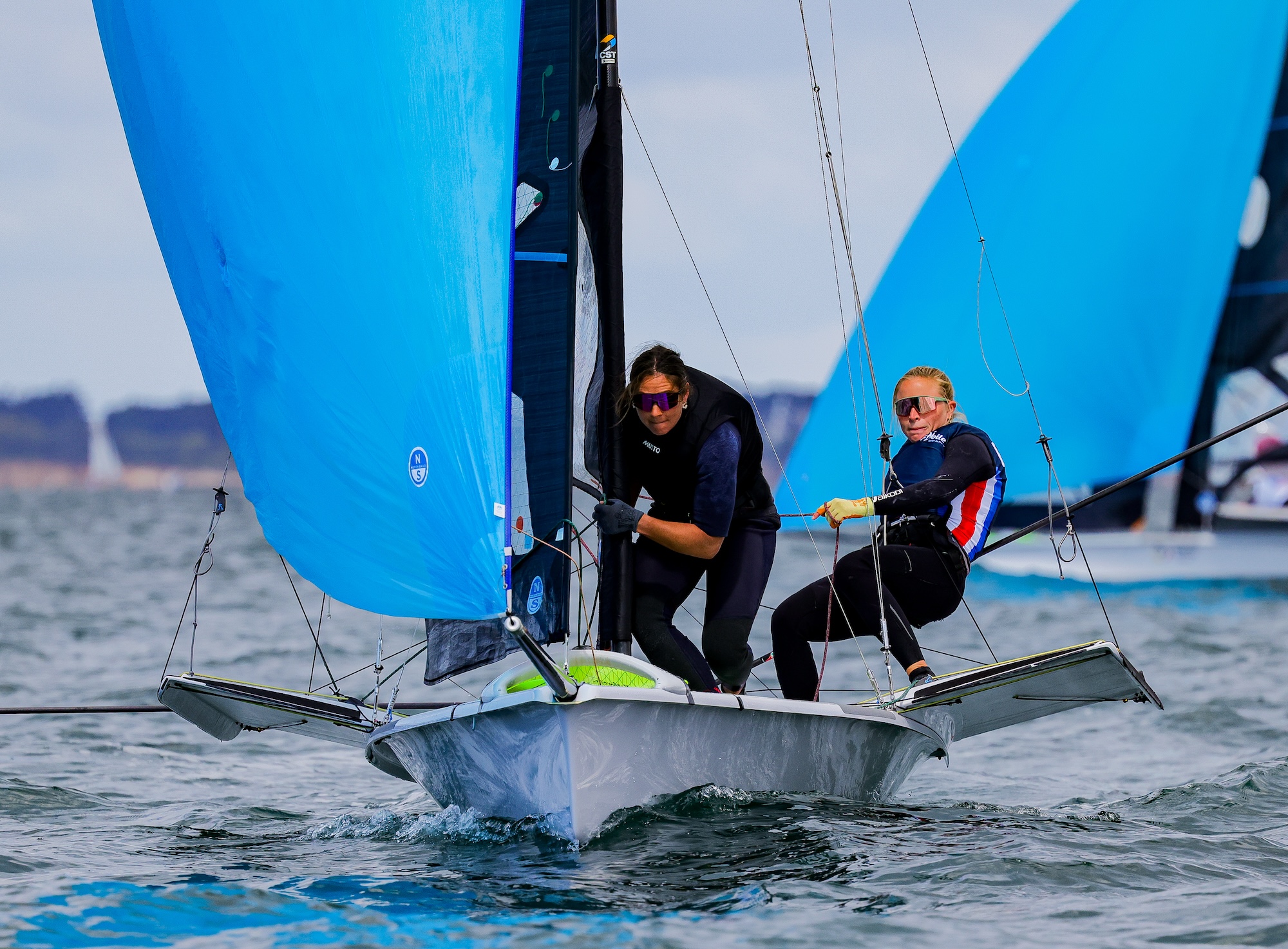
If the 49er and Nacra 17 gold fleets had their share of drama today, the 49erFX may have provided the most compelling storyline of all. France’s Manon Peyre and Amélie Riou — who had quietly assembled a solid qualification series — arrived in gold fleet and immediately announced themselves, using their knowledge of the local conditions to pull clear of the field and lead the championship on 43 net points after ten races.
Three races today, three top-ten finishes for Peyre and Riou: a 9th, a 1st, and a 7th. It was the race win in the middle race that will have turned heads, and the crowd ashore in Quiberon will have noticed. They sit 5 points clear of reigning world champions Spain’s Paula Barceló and María Cantero, who themselves had a mixed but ultimately positive day — a 6th, a 3rd, and a 4th to consolidate second overall on 48 points. The Spanish pair have now dropped their worst score (an 18th from the qualification series) and look increasingly dangerous as the racing tightens.
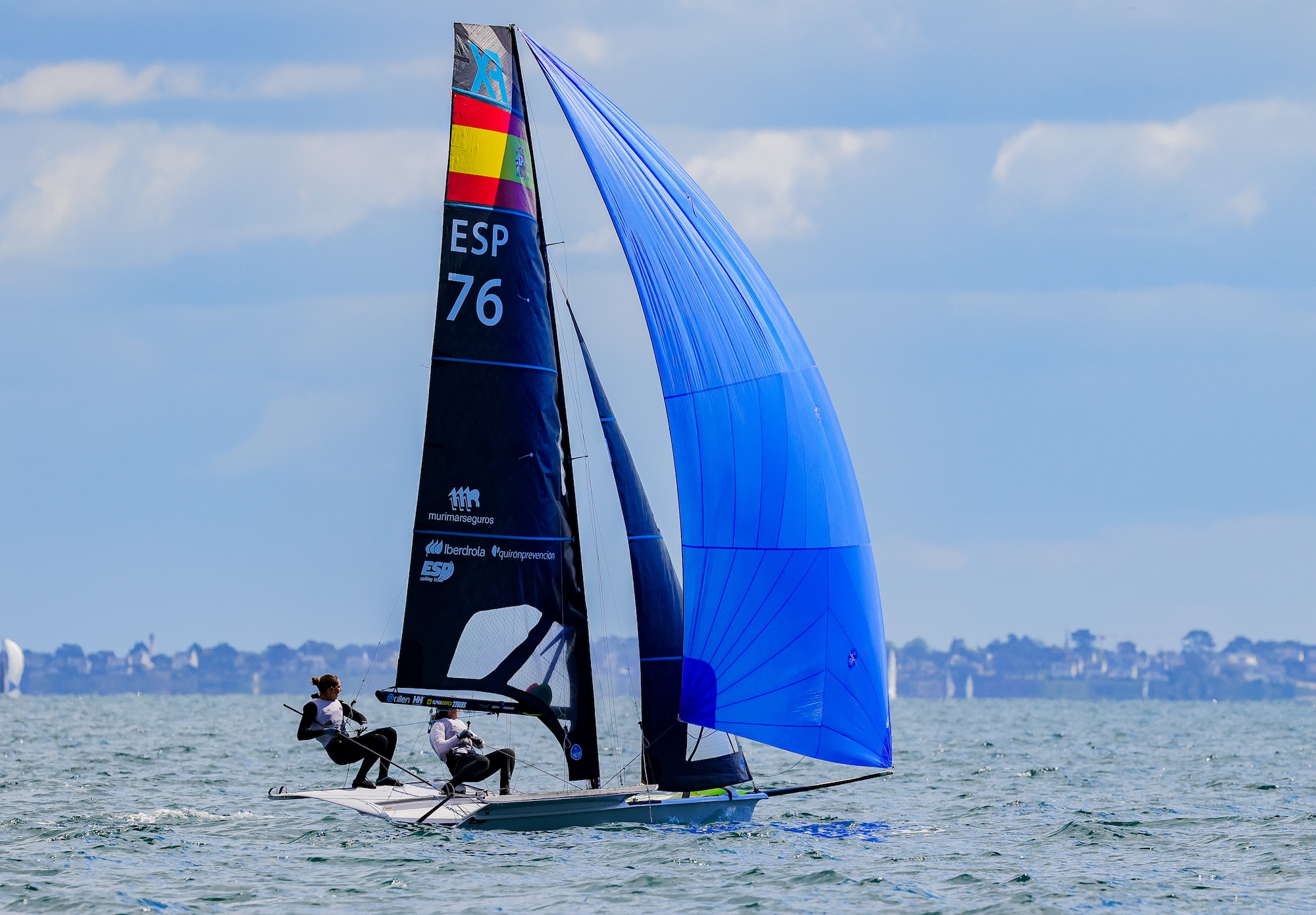
© Sailing Energy / 49er and Nacra Class
Belgium’s Isaura Maenhaut and Anouk Geurts round out the podium places in third on 56 points, their day capped by a strong 2nd in the final race to edge ahead of the chasing pack. Just behind them, the Danish sisters Johanne and Andrea Schmidt sit fourth overall despite a difficult final gold fleet race — a 21st that will sting — while Germany’s Marla Bergmann and Hanna Wille are fifth, showing the kind of composed sailing that made them a dark horse pick before the event.
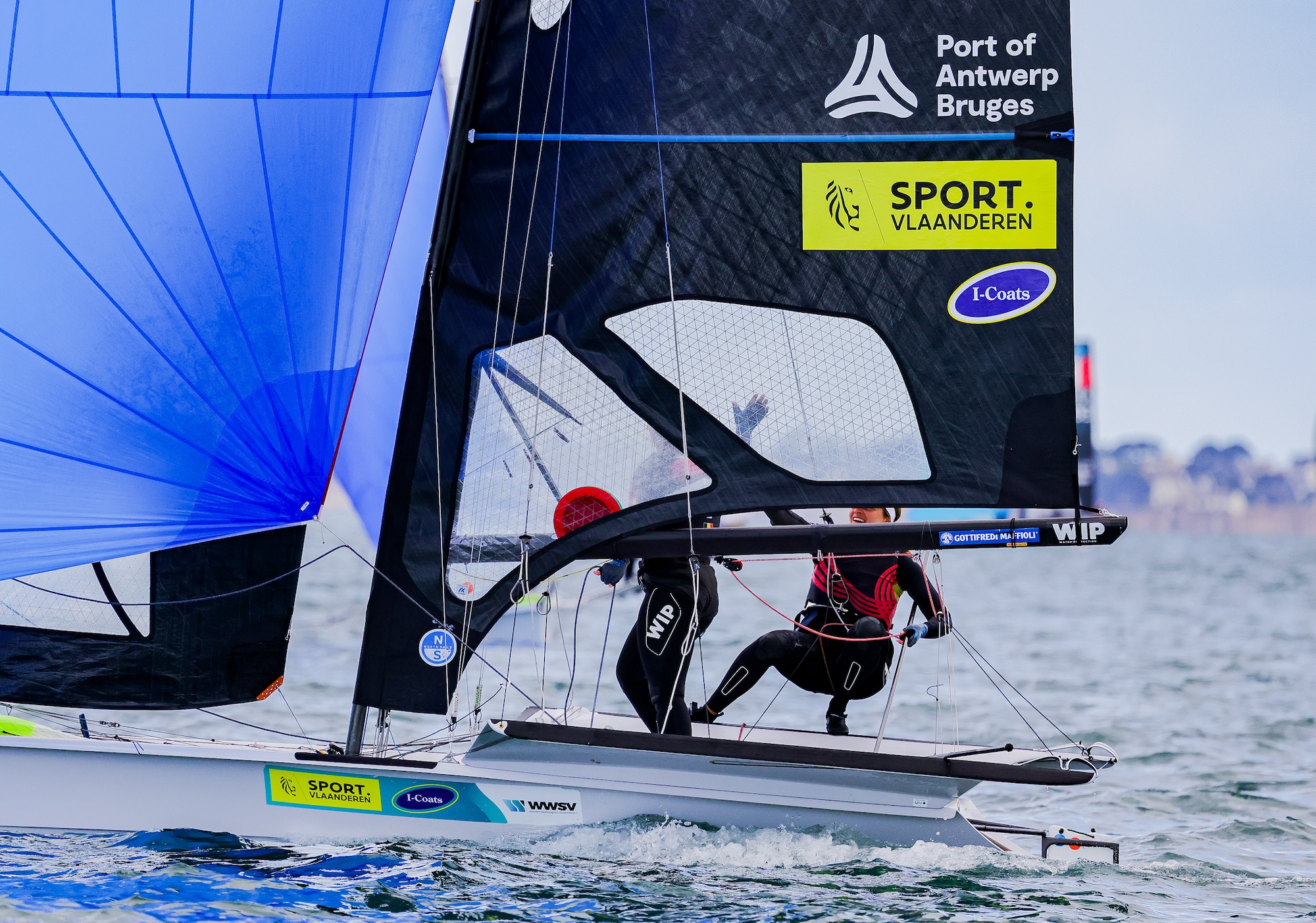
© Sailing Energy / 49er and Nacra Class
View this post on Instagram
Great Britain’s Freya Black and Saskia Tidey, who carry world number five ranking into the week, are sixth overall and very much in the hunt. Their day was uneven — an 18th sandwiched between a 2nd and a 1st — but that race win shows the pace is there when the conditions suit them.
View this post on Instagram
The bigger picture story from today is the position of pre-event world number one Canada’s Georgia and Antonia Lewin-LaFrance, who sit 14th on 78 points. A redress score (RDG) somewhere in their tally tells part of the story of a difficult campaign so far, but at 35 points off the lead with only a handful of races remaining before the medal series, they face a significant recovery task. Sweden’s Vilma Bobeck and Ebba Berntsson, 2025 Worlds silver medallists and consistent front-runners all season, are seventh and within reach of the podium — they’ll be one to watch if the breeze builds in the coming days.
With the championship entering its final phase, the gap between first and the cut for the top-ten medal series looks far more precarious than it did at the start of the week for several big names. Tomorrow’s racing will start to determine who is genuinely fighting for gold and who is managing a damage-limitation exercise.
The Digital Revolution: Electronic starting and the Death of the General Recall
Beyond the maneuvers on the water, the 49er fleet’s use of the Vakaros electronic starting system was the quiet hero of the day. For the first time at a major championship in Olympic sailing, the skiffs operated with a digital start line. Sailors were alerted to OCS (On Course Side) status by instant red or green lights on their bow units.
The result was a revelation for the broadcast: while the Nacra fleet (still using traditional flags) suffered through multiple general recalls and long delays, the 49ers started every race exactly on time. As class manager Ben Remocker noted, the system doesn’t just benefit the TV schedule, by allowing races to start on time, it also removes the “broken telephone” effect of 30 boats trying to synchronize watches with a committee boat. It allows for a “purer” race where everyone involved knows they are valid in the race, not having to wait until after a 30 minute hard fought battle with an already disqualified team.
Looking Ahead: A 180-Degree Shift
As the sailors head for their evening crepes at the Quiberon yacht club, the tension remains palpable. The points at the top of all three classes—49er, 49er FX, and Nacra 17—remain incredibly compressed. Tomorrow’s forecast predicts a total reversal of the wind direction, turning the bay into a completely different tactical puzzle. For leaders like Menzies and Rush, the goal will be to maintain their “no-discard” consistency; for the chasing world champions, it will be about finding that elusive “second gear” in the new breeze.
The stage is set for a thrilling penultimate day of fleet racing before Sunday’s high-stakes medal series. At this level, as today proved, a single gust or a perfectly executed roll-tack can be the difference between a world title and a place in the middle of the pack.