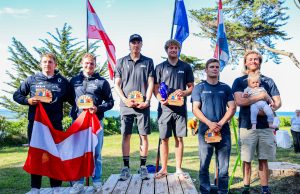
Second Week of Olympic Class Racing Defined by Comebacks, Slow Climbs, and Wire-to-Wire Wins Across Fleets
SAN PEDRO, CA – The second week of San Pedro OCR came to a close Sunday with 3 pairs of Olympic-class sailors crowned champions on the waters that will host sailing at L.A.’s 2028 Olympic Games. Sweden’s Vilma Bobeck and Ebba Berntsson won in the 49erFX, Germany’s Richard Schultheis and Fabian Rieger captured gold for the 49er, and Sweden’s Emil Järudd and Hanna Jonsson clinched the Nacra 17 win after a week-long climb through the standings.
The final day brought 2 short, high-intensity medal races for each fleet, with the top 10 teams returning to the inner course inside the breakwater. While the compressed scoring system created the potential for movement across the standings, the leaders in all 3 fleets largely held position to the finish.
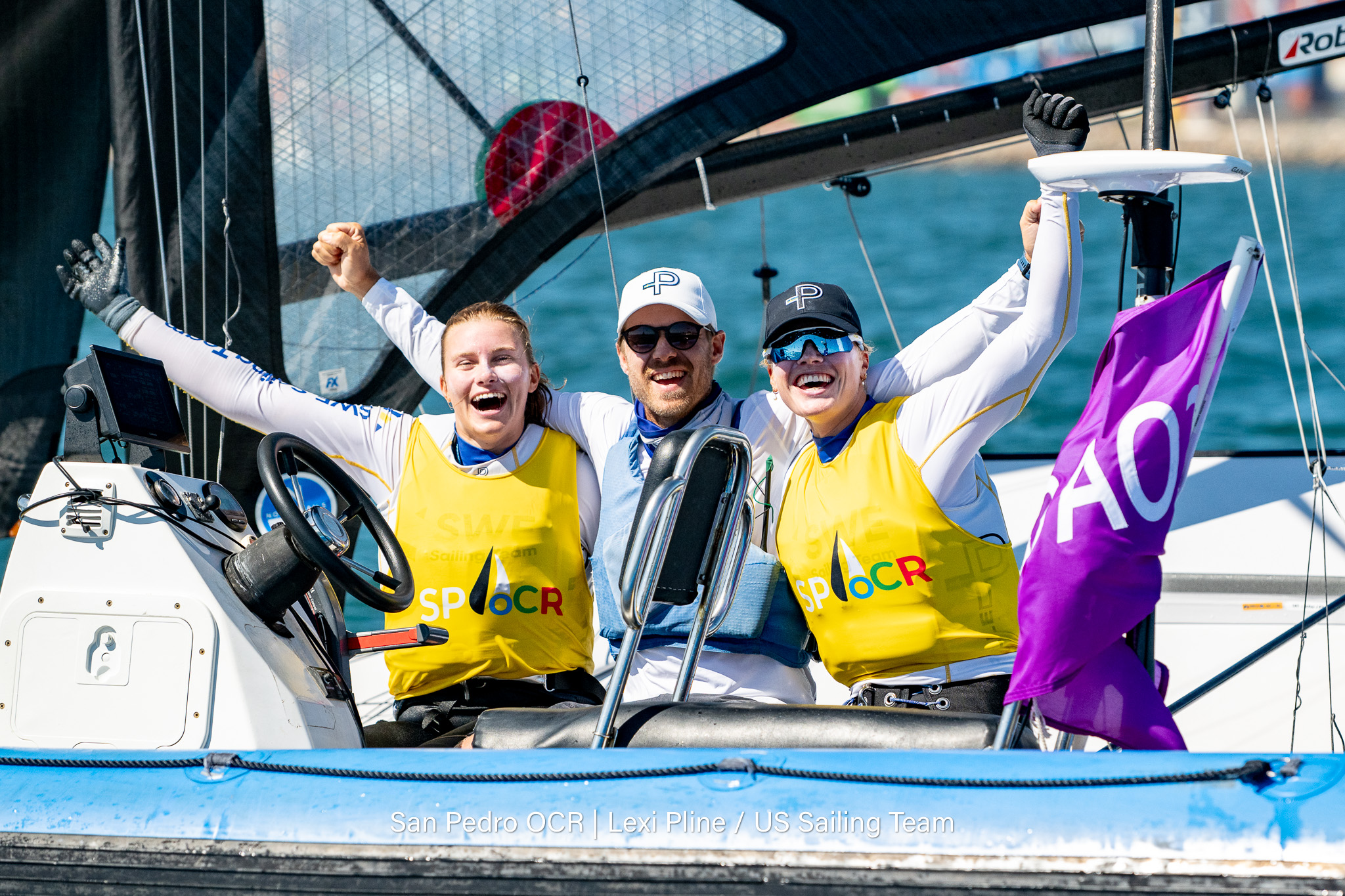
For Bobeck and Berntsson, the 49erFX title capped a week in which they steadily figured out how to navigate the L.A. Waterfront’s demanding conditions. The Swedish pair entered the medal races in first and never surrendered their lead, finishing second in the starting race and winning the final race of the regatta.
The result marked an important achievement for a team who said they struggled early in the week to find their rhythm.
“It’s not been so easy,” said Bobeck, who began her regatta among the victims of San Pedro’s local stingray population. “I made some friends,” she laughed. “Or perhaps not!”
“As for the racing, there were some hectic starts and a bit of a war zone sometimes, but we learned a lot during our climb throughout the week. To win here at the Olympic waters means a lot.”
“We’re very happy,” smiled Berntsson. “It’s here we want to be at our best.”
The teammates credited improved starts and a simplified approach with turning their week around.
“We for sure learned how to keep it simple throughout the week,” Berntsson said. “We did not in the beginning.”
The simplicity paid off when it mattered most. With a 9-point cushion entering the Final, Bobeck and Berntsson executed a good start in the first race of the day and used their speed to finish in second. With the title effectively in hand, they returned to the course for the final race, won the start, and sailed to another strong finish.
“We just enjoyed it. It was so much fun,” Bobeck said.
Behind the Swedish, Spain’s Paula Barcelo and Maria Cantero took the silver medal and Great Britain’s Freya Black and Saskia Tidey earned bronze.
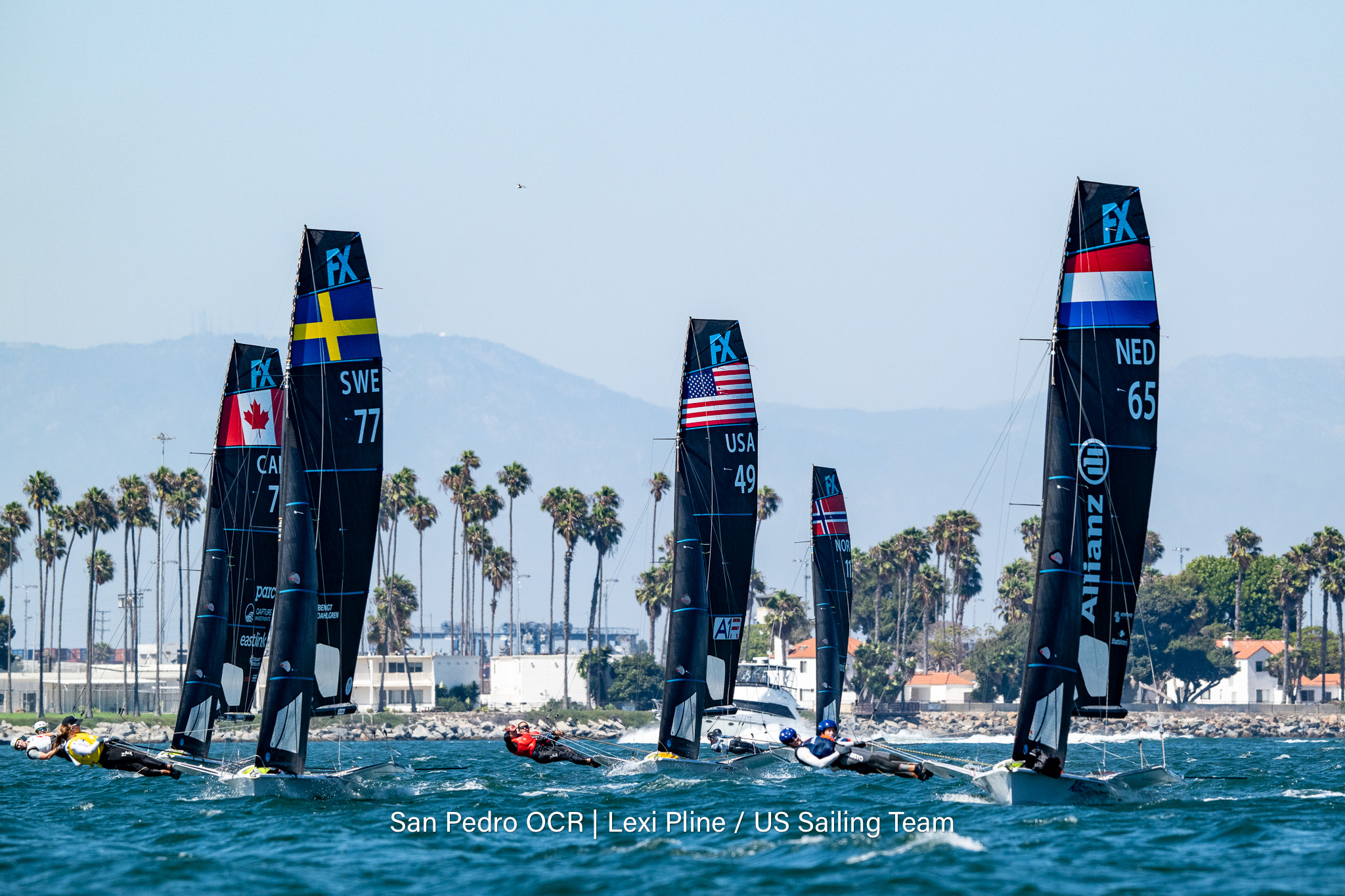
Overall, the top 5 teams entering the medal races in the FX class remained the top 5 at the finish. With positions 6 through 10 tied entering the Final, the compressed scoring introduced an intriguing opportunity for teams to attack the top 5 and make a run at the podium. In the end, however, there was no shake-up at the top.
In the 49er, Germany’s Richard Schultheis and Fabian Rieger provided the week’s most consistent top performance, leading the fleet from start to finish. They entered the medal races in first and left them there, winning the opening sprint before finishing second in the finale.
The Germans built their advantage over 5 days of qualifying and never allowed the compressed scoring to erase their lead. Their consistency proved decisive.
“It’s race after race, and then keep it clean,” Rieger said of their approach to the regatta.
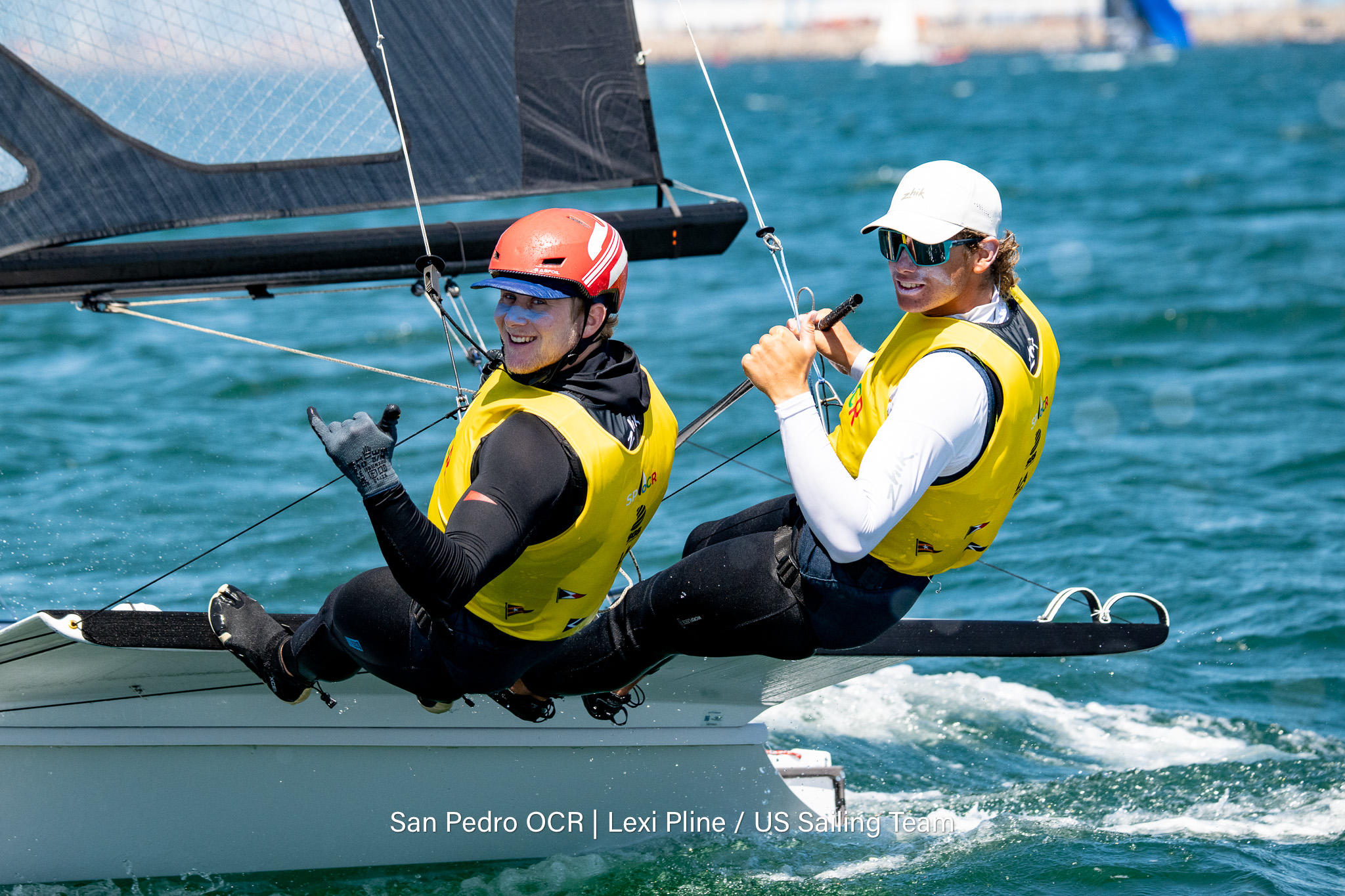
Behind them, Great Britain’s James Grummet and Rhos Hawes won the final medal race to move into the silver-medal position, while Uruguay’s Hernán Umpierre and Fernando Diz finished third overall.
Umpierre and Diz entered the final day in second but dropped a position after finishing outside the top 3 in the medal races. Even so, their podium capped a strong recovery from the middle of the week, when equipment problems and an OCS had dropped them down the standings.
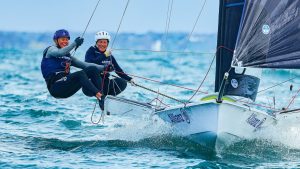
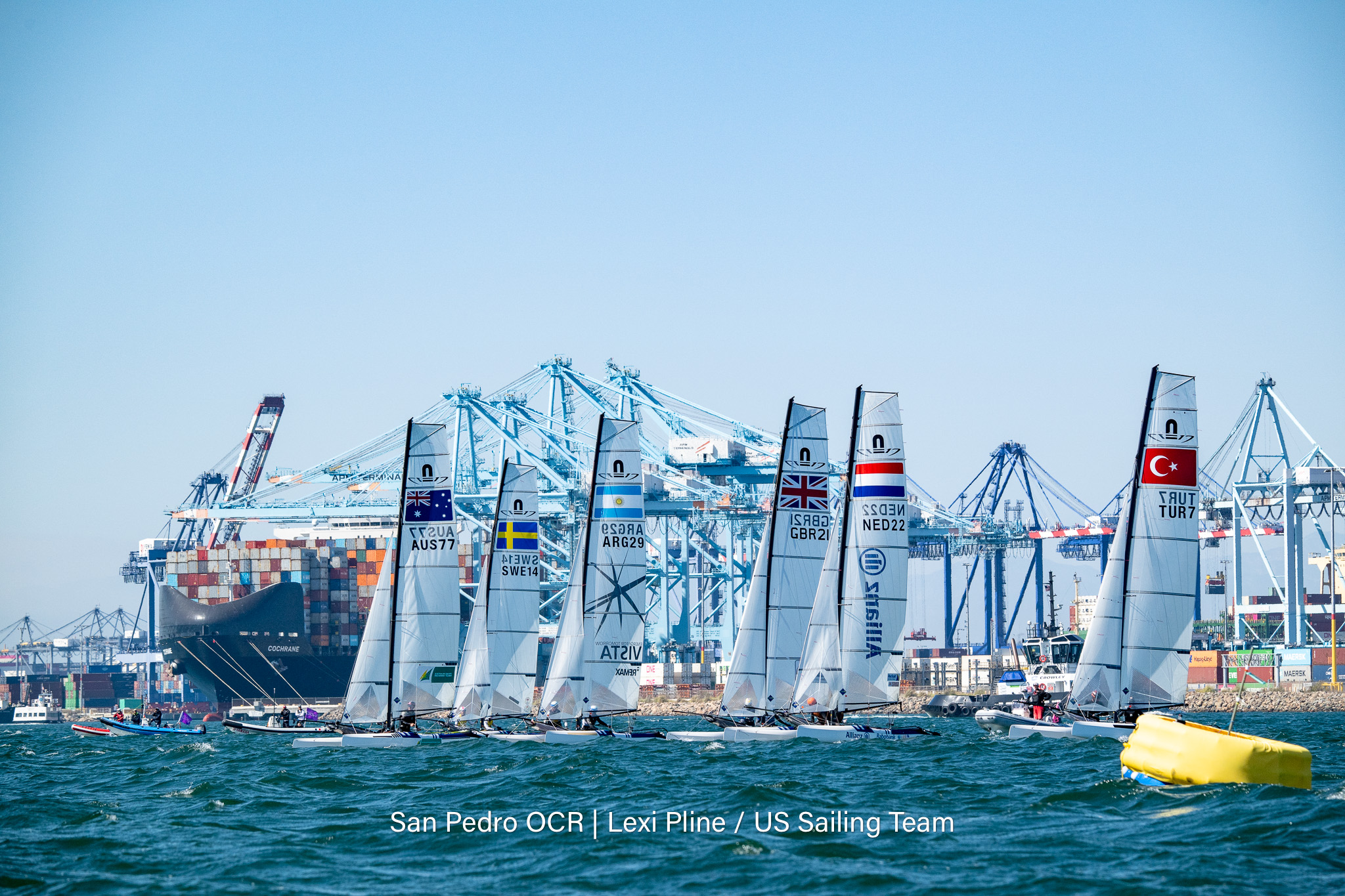
In the Nacra 17 class, the Netherlands’ Willemijn Offerman and Scipio Houtman finished third overall. The Dutch team said they spent much of the week learning rather than chasing results, emphasizing the value of understanding the Olympic venue and experimenting with different approaches.
“Every day is just a little bit different, and recognizing what works and what doesn’t is an important lesson here,” said Houtman.
“The devil is in the detail,” added Offerman.
Their medal capped a week in which the Nacra fleet experienced some of the most intense racing of the regatta, particularly on the inner course.
Great Britain’ s Gimson and Burnet finished second overall, completing one of the most impressive recoveries of the race week. After opening the regatta in second, they endured a difficult stretch that dropped them back to fifth, starting with a UFD on Day 2 and ending with a DSQ on Day 3.
“I feel like we’ve been collected every letter in the alphabet,” Gimson lamented on Wednesday.
Determined not to let the penalties define their week, the Brits mounted a stunning comeback from Thursday forward, completing 8 consecutive top-3 finishes. The work landed them back into second, positioned within a point of the leaders entering the Final, though the class title was ultimately claimed by Sweden’s Emil Järudd and Hanna Jonsson.
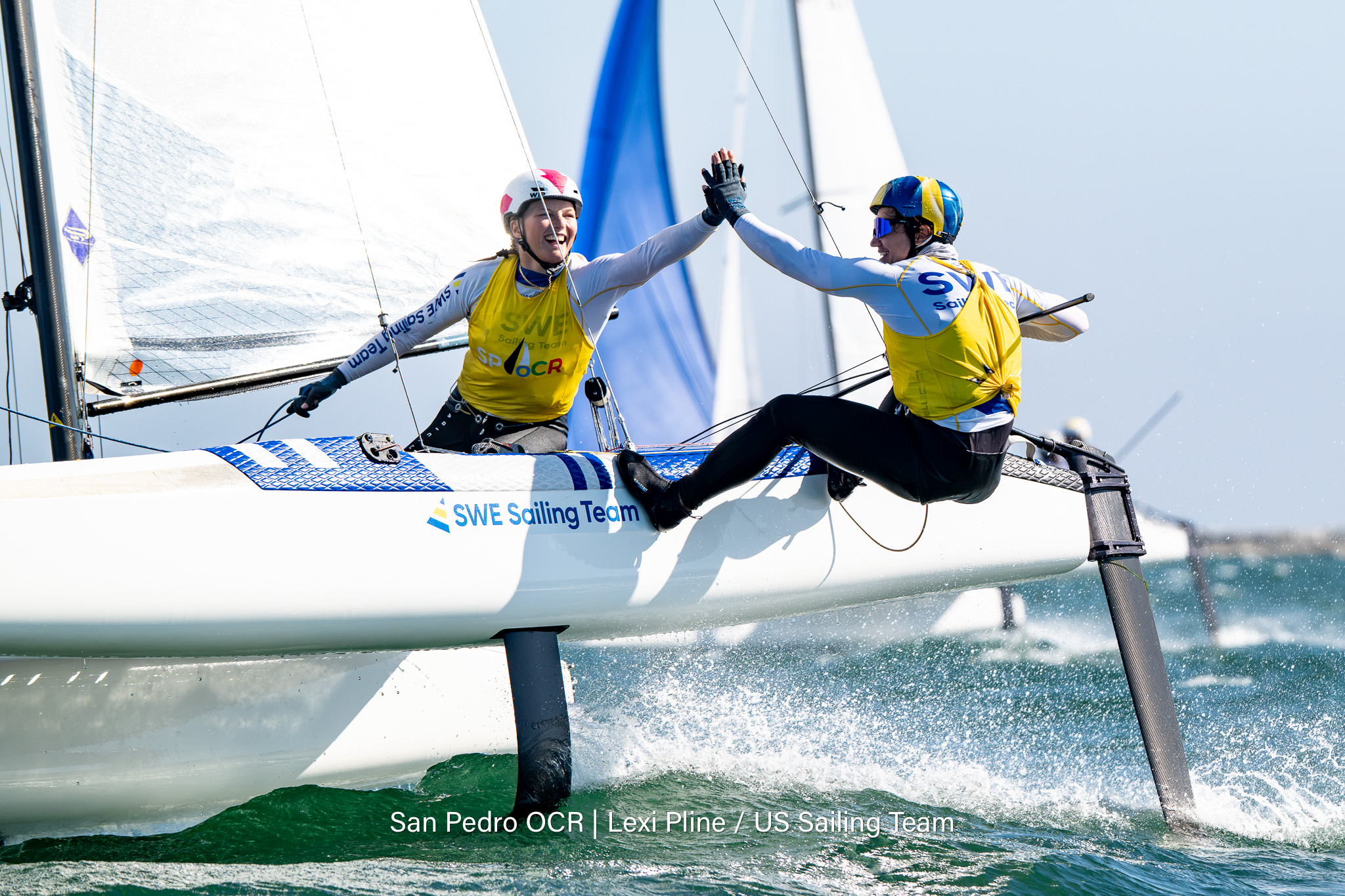
Järudd’s and Jonsson’s slow-motion ascent of the podium started with a third place finish on Day 1. They moved to second after Day 3, and eventually took over the outright lead on the fourth day of racing. They entered Sunday’s medal races with a tight 1-point advantage over Gimson and Burnet.
The Swedes held their nerve. After finishing outside the top 3 in the opening race of the Finals, they returned to post a second-place finish in the last race, securing the overall victory.
“You really had to keep your head out of the boat,” said Jonsson. “Just try to fly high and go as fast as you can.”
“It’s the most intense teamwork you can imagine, which makes it really fun,” added Järudd.
The final day also highlighted the sportsmanship that has been a constant throughout San Pedro OCR. American 49erFX sailor Helena Scutt, racing with Paris Porter, attended the awards ceremony to support fellow competitors and cheer on their achievements, despite not finishing on the podium and without an American team among the medalists. Scutt had also attended the previous race week’s closing ceremony to support her friend and U.S. teammate Charlotte Rose after Rose won silver in the ILCA 6.
Across 2 weeks of racing, San Pedro OCR gave Olympic-class sailors their first extended opportunity to compete on the waters of the future L.A. 2028 Olympic Games. The 6-day second week brought together 140 competitors from 20 countries, including 27 Olympians and 7 Olympic medalists.
For the sailors who will ultimately return to this venue for next year’s OCR and for the 2028 Games, the results will be only one part of what they take home. The conditions, start-line dynamics, and tactical patterns discovered across the race area and throughout the week will shape their training plans for the 2 years ahead.
Racing concluded Saturday, August 8. Event details, entry lists, results, and schedules can be found at sanpedroocr.org and you can find the regatta on instagram at @SanPedroOCR.
Generous support for the regatta is provided by Capstan, BP Home, American Marine, and the Pacific Environmental Corporation (PENCO). Race Committee and volunteer support is made possible with the help of World Sailing, Los Angeles Yacht Club, Cabrillo Beach Yacht Club, Bahia Corinthian Yacht Club, Balboa Yacht Club, California Yacht Club, Long Beach Yacht Club, and Newport Harbor Yacht Club.
San Pedro OCR is 1 of only 2 major Olympic Class events that take place in the United States.
Media Contact: Meredith Glacken
Phone: 415-515-2084